Research
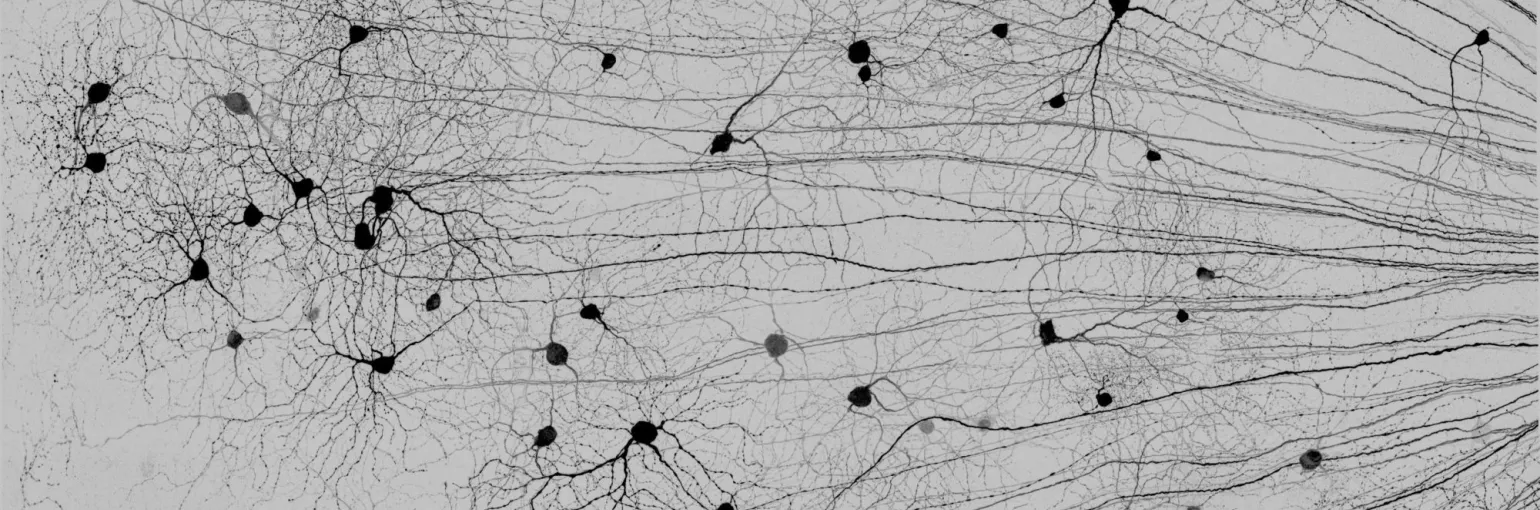
The neural circuits of the innate visual behaviors
We are interested in how the neural circuits of the early visual system are organized to parse and disseminate visual information to mediate innate behaviors that balance the need to find food and avoid predators. To accomplish this, we combine trans‐synaptic circuit tracing techniques with high-throughput neuronal recordings (2-photon calcium imaging, functional ultrasound imaging, Neuropixels) and cell-type specific manipulations to understand how the circuits passing through the superior colliculus are organized to integrate and disseminate information resulting in an appropriate behavioral choice.

Brain-wide networks mediating collicular dependent behaviors
To understand how the superior colliculus guides behavior we are dissecting its input and output circuits. First, using trans-synaptic viral tracing we delineate the logic by which inputs to the superior colliculus are sampled by different cell-types and output pathways (Reinhard*, Li* et al., 2019). Second, in collaboration with the Urban Lab we are combining optogenetics and functional ultrasound imaging (fUSI) to map the brain-wide networks downstream of the superior colliculus (Sans-Dublanc*, Chrzanowska* et al., 2021). These two types of experiments suggest that visual inputs are sampled by dedicated hard-wired arcs that are well suited to link distinct visual features with the triggering of a specific behavior. We are now asking how the brain-wide inputs to the colliculus can support flexible behavioral responses that account for a variety of contextual variables including: sense of safety, access to food, exposure to trauma (Li, Kühn et al., 2023).

The evolution of neural circuits and innate behaviors
To determine how collicular circuits have adapted to different ecological niches we compare two species of Peromyscus (PO and BW), which show distinct responses to stimuli mimicking overhead predators. Together with Felix Baier from the Hoekstra Lab, Katja Reinhard has been combining behavior, optogenetics and NeuroPixels to determine if the role individual brain structures in the early visual system play is the same in each species. This work establishes the use of a set of molecular and circuit neuroscience tools (Rabies tracing, AAV expression of opsins, head fixed probe recordings) for use in Peromyscus that will enable us to determine how elements of the early visual system evolved in response to different environmental pressures.
Degeneration and regeneration
As animals mature, neurons in the central nervous system typically lose the ability to regenerate after injury. To get a better understanding of the relationship between the capacity to regenerate and the degree of maturity we characterized the dendritic structure of mouse retinal ganglion cells during development and response to injury in transcriptionally similar cells. To accomplish this we apply a set of quantitative anatomy, modelling and functional imaging approaches. The insights we get from these experiments will help establish a timeline for implementing axonal regeneration strategies in clinical settings, as we acquire a thorough understanding of the degeneration progression following retinal ganglion cell axon injuries.
Key Publications
The neural basis of species-specific defensive behaviour in Peromyscus mice
Felix Baier*, Katja Reinhard*, Bram Nuttin, Arnau Sans-Dublanc, Chen Liu, Victoria Tong, Julie S. Murmann, Keimpe Wierda, Karl Farrow^ & Hopi E. Hoekstra^ (2025). Nature, 645, pages439–447
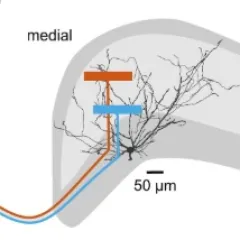
Dendritic architecture enables de novo computation of salient motion in the superior colliculus
(2025). Current Biology, Vol. 35, Issue 16, 3799-3811.e8.
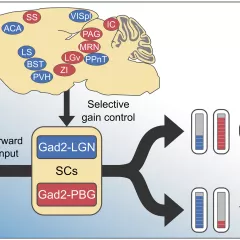
Pathway-specific inputs to the superior colliculus support flexible responses to visual threat
Li C*, Kühn NK*, Alkislar I, Sans Dublanc A, Zemmouri F, Paesmans S, Calzoni A, Ooms F, Reinhard K* and Farrow K* (2023). Pathway-specific inputs to the superior colliculus support flexible triggering of innate behaviors. Science Advances. 9, eade3874.
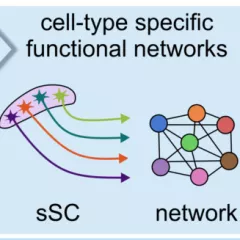
Optogenetic fUSI for brain-wide mapping of neural activity mediating collicular-dependent behaviors
Sans-Dublanc A*, Chrzanowska A*, Reinhard K, Lemmons D, Nuttin B, Lambert T, Montaldo G, Urban A and Farrow K (2021). Neuron. 109: 1-18.
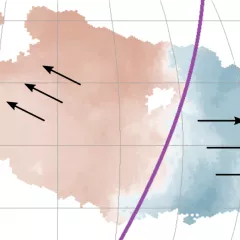
Retinotopic Separation of Nasal and Temporal Motion Selectivity in the Mouse Superior Colliculus
Daniel De Malmazet, Norma Kühn, Karl Farrow (2018). Current Biology, 28(18), 2961-2969.